
What Luxury Home Buyers Notice in the First 10 Seconds of a Showing

Updated: 6 days ago
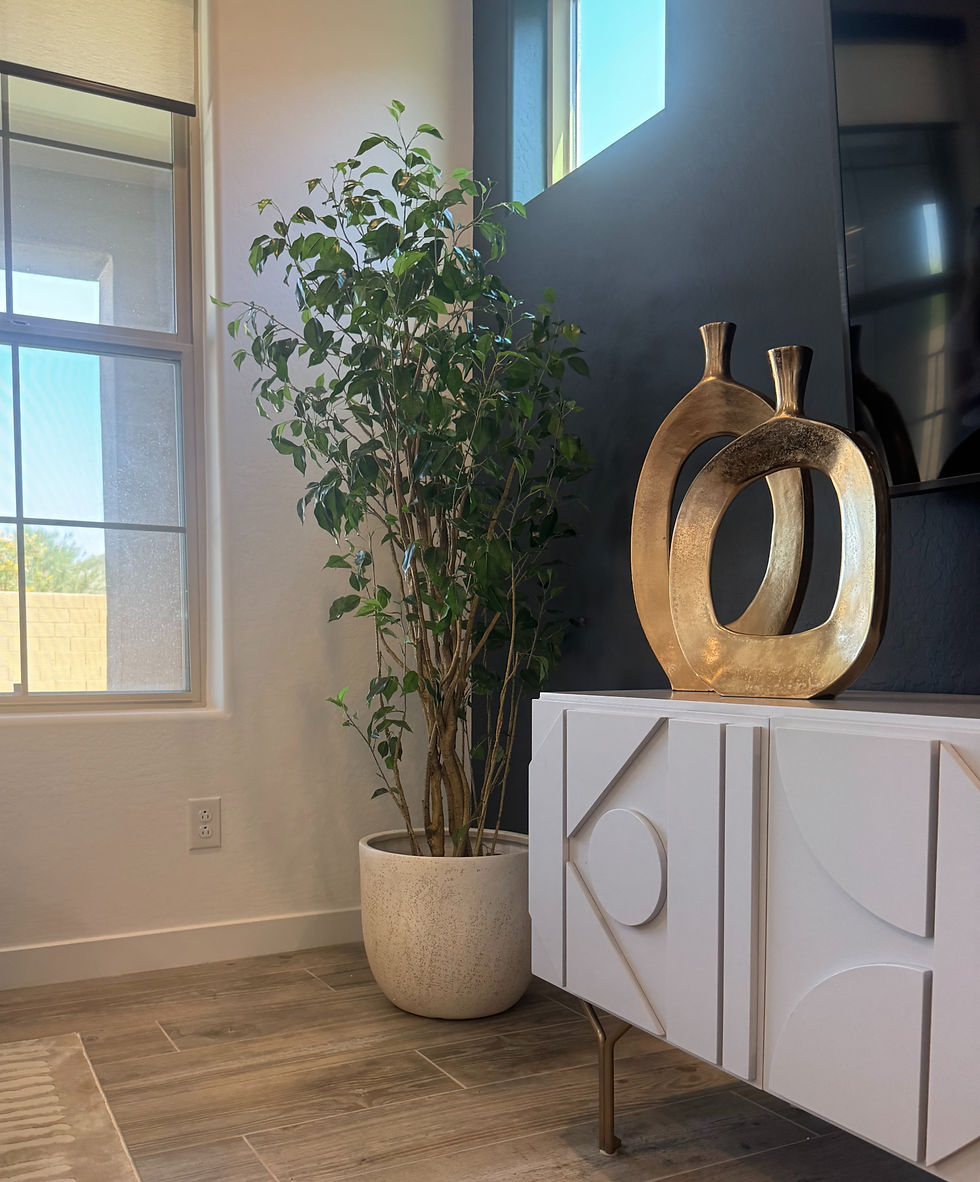
Buyers don't walk into a home and analyze it, they feel and experience it. And that feeling is formed in the first few seconds and shapes everything that follows, whether they're stepping through the front door in person or scrolling through listing photos on a Tuesday afternoon.
In markets like Scottsdale, Paradise Valley and Arcadia, where expectations are high and inventory at the luxury level tends to be polished, buyers have seen a lot of great homes. Their instincts are calibrated. They may not be able to tell you exactly what made a home feel right, or why another one didn't quite land despite checking every box on paper, but they know it immediately. And once that initial reaction forms, it's nearly impossible to reverse.
Understanding what's actually happening in those first ten seconds is part of what guides how we approach every staging project. We don't think about furniture or accessories in isolation. It's really about what a home communicates before a buyer has consciously thought about a single room.
The Overall Register of the Home
The very first thing a luxury buyer experiences isn't a space. It's a register or a general impression of whether the home feels considered, coherent and at the level they came to expect based on the price point and neighborhood.
This happens almost entirely unconsciously, before a buyer notices the countertops or admires the ceiling height, something more elemental is already being evaluated: the quality of the light, the relationship between the entry and what's beyond it, whether the scale of the furnishings feels proportional to the architecture, and whether the overall palette reads as calm and deliberate or busy and unresolved. Said another way... does this make sense?
When that register is right, the rest of the showing gains momentum. Buyers lean in and linger. They start noticing details in an appreciative way rather than a skeptical one. But when the initial register is off, the skepticism arrives first and buyers spend the remainder of the showing confirming their initial doubt rather than reconsidering it.
Light, and Everything It Touches
Luxury buyers in Scottsdale, Paradise Valley and Arcadia are particularly attuned to light. It's one of the defining qualities of living in the desert, and it affects how every other element of the home is experienced. Natural light, when it flows correctly through a home, does something no amount of furniture and styling can replicate. It establishes warmth and it makes materials read honestly. The way afternoon light moves across a plaster wall is the kind of detail that photographs beautifully and registers immediately in person, even if no one standing in the room would think to name it as the thing they're responding to.
Layered artificial lighting matters just as much after dark, and in spaces where natural light is limited. Warm ambient light, proper task lighting in kitchens and baths, and accent lighting that highlights architectural features or meaningful objects. These work together to create an atmosphere that flat overhead lighting simply cannot produce. Buyers who have spent time in well-designed hotels, in homes with considered interiors, or in the kinds of environments that luxury living is meant to evoke carry an almost unconscious understanding of what good light feels like. They notice its presence the way they notice good wine.
The Connection to the Outdoors
In Scottsdale, Paradise Valley and Arcadia, indoor-outdoor flow is not a feature, it's a fundamental expectation. And buyers establish whether a home delivers on that expectation almost immediately. They're not walking in and thinking, "Let me evaluate this home's relationship to its exterior." They're simply drawn toward light, toward views, toward the sense that beyond the great room there's something worth moving toward. If that sense doesn't arrive quickly, the home loses one of its most significant advantages and in desert luxury real estate, that's a big loss.
The best-staged luxury homes in this market frame the outdoors as part of the interior story. The eye is guided toward mountain views, toward pool terraces with furniture that suggests actual use, toward outdoor dining spaces that look like they host real evenings. When buyers see a patio styled with the same care as an interior room, they aren't just evaluating the outdoor space. They're imagining the life.
The Signals That Suggest a Life Well Lived
This is the part of the first impression that separates a home that feels furnished from a home that feels genuinely elevated. It's the part most difficult to manufacture, though thoughtful staging can absolutely create it. And honestly, this is one of our favorite parts!
Luxury buyers at the higher end of the market are often well-traveled. They've stayed in places that reward the eye: a hotel in Morocco where every surface has texture and intention, a villa in Tuscany where the ceramics on the kitchen shelf look like they were actually found somewhere, a resort where the art on the wall feels like it was chosen by someone with a point of view rather than installed by the property.
Those experiences create a refined pattern recognition that follows them into every property showing. What they respond to, often without realizing it, is evidence of curation. A small collection of objects... a piece of sculpture, a ceramic bowl, a hand-thrown vessel, etc. That feels genuinely considered rather than mass-assembled. Books arranged with enough personality to suggest they've actually been read. Original artwork, or limited-edition work, that carries the weight of a decision behind it rather than a generic landscape selected for inoffensiveness. Natural materials — leather, rattan, aged wood, linen — that have texture and depth rather than the synthetic uniformity of things chosen for durability alone.
None of this requires spending more money. It requires a different kind of attention... the same attention a well-designed hotel brings to a guestroom, or a high-end retailer brings to a display. The goal isn't to impress. It's to create a setting in which the buyer can imagine a version of themselves that feels aspirational.
Scale, Proportion and the Feeling of Rightness
One of the subtler things luxury buyers register immediately is whether a space feels physically right — whether the furniture is scaled appropriately to the room, whether the ceiling height is being acknowledged or ignored, whether the rugs anchor the seating areas or simply float in the space untethered.
Scale affects perception in ways that are genuinely difficult to articulate but impossible to overlook. A sectional sofa that's slightly too large for a living room makes the room feel smaller than it is. A dining table that's too small for its space makes the room feel poorly considered. A bedroom where the bed is dwarfed by the architecture reads as unresolved, even when the finish level is excellent.
When scale is right, none of this is consciously noticed. The room simply feels correct. Effortless. That quality — the sense that everything is exactly where it should be and sized for the life actually being lived there — is one of the defining characteristics of a home that buyers respond to immediately and remember afterward.
Restraint as a Luxury Signal
Perhaps counterintuitively, one of the clearest signals of luxury in a well-presented home is what isn't there. Buyers at this level have seen plenty of homes that are fully furnished to the point of visual exhaustion — where every surface has something on it, every wall has something hanging from it, and the overall effect is abundance without intention.
That approach reads as effort. And luxury, as a feeling, is the opposite of visible effort.
The homes that register immediately as elevated tend to have breathing room. Open counter space in the kitchen. A wall with one strong piece of art rather than a gallery of smaller pieces competing for attention.
Nightstands with two or three considered objects rather than everything that accumulated there over the years. That restraint communicates confidence in the home, in the architecture and in the design decisions that were made. And confidence is one of the most powerful things a home can project.
What Buyers Feel But Don't Say
This is where much of the difference between a home that sells quickly and one that lingers on the market actually lives. Buyers won't walk out and tell their agent, "The staging didn't acknowledge the focal point," or "The accessories felt generic." But they will say things like, "It just didn't feel right," or "I couldn't picture us there," or "Something was off but I can't put my finger on it."
That gap between what buyers feel and what they can articulate is precisely where staging does its most important work. It's not about decorating a home. It's about controlling the emotional experience of the first ten seconds... what stands out, what feels clear, what draws a buyer in and what quietly earns their trust before a single room has been evaluated.
When that experience is well constructed, buyers don't notice the staging. They notice the home. And that's exactly the point.
Why This Matters Differently in Scottsdale
Luxury buyers in the Scottsdale and Paradise Valley market are often relocating from cities with deeply established design cultures — Los Angeles, San Francisco, New York, Chicago. They bring with them an accumulated visual literacy that's been sharpened by exposure to everything from award-winning architecture to exceptionally designed restaurants to retail environments that treat the customer experience as seriously as the product itself.
That baseline shapes what they expect when they walk through a door. Not flashiness. Not perfection. But a level of intention that signals the home has been prepared for them rather than simply placed on the market. When that intention is present from the first step inside, the entire showing changes. Buyers who feel that a home is thoughtfully prepared give it the benefit of the doubt. They look for reasons to commit rather than reasons to move on. The first ten seconds aren't everything in a showing, but they shape everything that follows.
See how we used color, original artwork and layered styling to give our own former McCormick Ranch home a distinctive personality without sacrificing broad buyer appeal. Read the Del Paraiso case study →
FAQ: How Staging Shapes First Impressions
Do first impressions really matter this much when selling a home? They shape everything that follows. Buyers form an immediate emotional response within the first few seconds — in person and in photography — and that response influences how they evaluate every room that comes after it. A strong first impression creates momentum. A weak one creates skepticism that's genuinely difficult to overcome.
What specific details do luxury buyers tend to pick up on? More than most sellers expect. Materials, textures, the quality of lighting, the scale of furnishings relative to the room, the relationship between interior and exterior spaces, and the overall sense of whether a home feels curated rather than assembled. Buyers who have experience with well-designed environments — hotels, private residences, retail — carry a refined pattern recognition that operates almost unconsciously.
Can staging create the feeling of a life well lived, or does it have to already be there? Thoughtful staging can absolutely create it. Carefully selected objects, original or considered artwork, natural materials with texture and depth, and a restrained approach to accessories can produce an atmosphere that reads as genuinely elevated — one that evokes the kind of environments luxury buyers respond to whether they encountered them in travel, in design, or in the homes of people whose taste they admire.
Why does restraint matter in a luxury listing? Because abundance without intention reads as effort, and luxury as a feeling is the opposite of visible effort. Homes that have breathing room — open counter space, walls that let one strong piece of art do its job, surfaces that aren't crowded — communicate confidence. And confidence is one of the most compelling things a home can project to a buyer.
What do buyers notice that they don't say out loud? Scale, proportion, lighting quality, and the overall sense of whether a home feels considered. Buyers rarely articulate these directly, but they feel them immediately. When something is off, they say the home "didn't feel right." When everything works, they say it felt like home — which is exactly the outcome the presentation is designed to create.
How do Scottsdale and Paradise Valley buyers differ from buyers elsewhere? Many arrive with substantial visual context — from cities with strong design cultures, from travel, from time spent in environments that treat design as seriously as this market does. Their baseline expectations are calibrated accordingly. What they're asking in the first ten seconds isn't just "Do I like this?" It's "Does this feel like it's at the level I expect?" The answer to that question happens fast.
For a broader overview of luxury home staging in Scottsdale, Paradise Valley, Arcadia and Phoenix, explore our complete staging guide.
And if you’re evaluating staging partners in the greater Phoenix metro, you can explore our services and approach here.
About the Author:
Mark Kats is the founder and creative director of Staging Scottsdale, a boutique luxury home staging firm serving Scottsdale, Paradise Valley and Arcadia. He works closely with agents, builders and sellers to help position homes for stronger first impressions and more compelling showings. Email mark@stagingscottsdale.com to schedule a consultation.


Comments